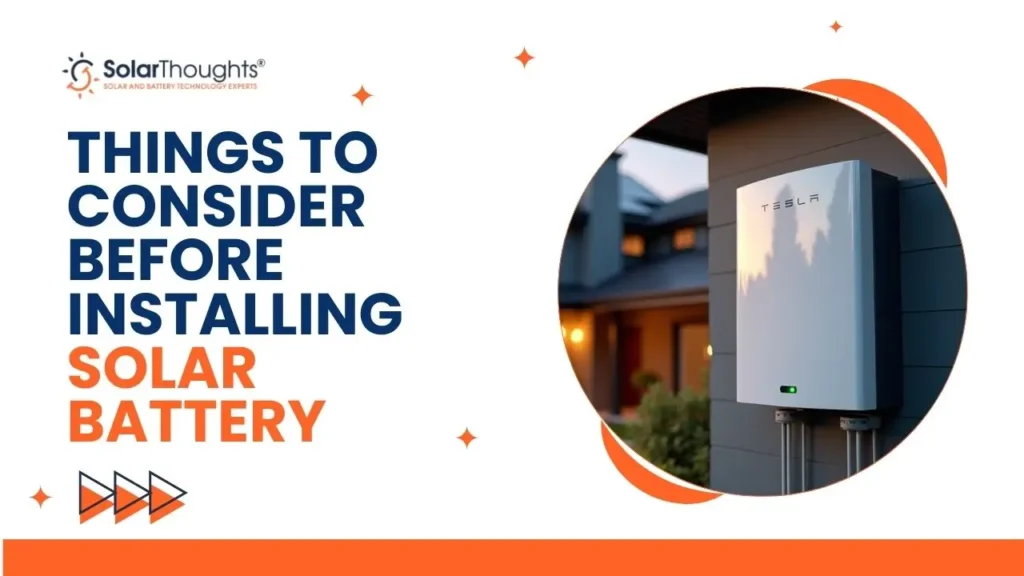
At SolarThoughts®, we understand that making smart energy choices requires clear, honest information. The average Australian household consumes around 16 kilowatt-hours (kWh) of electricity per day, with nearly 70% of usage occurring during late afternoon and evening hours.
Table of Contents
ToggleThis consumption pattern explains why solar batteries are becoming increasingly popular for Brisbane homes. A battery allows you to store excess solar energy generated during the day and use it when your household needs it most—after sunset. Whether your goal is reducing reliance on the grid, improving energy resilience, or preparing for future energy needs, understanding the things to consider before installing solar battery systems is essential.
Below are the seven most important factors to evaluate before making a decision.
1. Understand Your Energy Usage
Before installing a solar battery, you need a clear picture of how much electricity your household uses and when that usage occurs.
How much energy do you use daily?
Review your electricity bills from the past 12 months to calculate your average daily usage. Divide your annual kWh consumption by 365 to get a reliable daily figure.
Household size can also provide a rough estimate:
- 1–2 people: 8–15 kWh per day
- 3–4 people: 15–25 kWh per day
- 5+ people: 25–35+ kWh per day
Larger homes with air conditioning, electric hot water systems, pools, or EV charging may consume significantly more.
When do you use the most electricity?
Most Australian households use the majority of their electricity in the evening. Without a battery, this energy must be drawn from the grid. Homes that use more power after 5 pm generally benefit the most from battery storage.
Understanding both how much and when you use electricity is one of the most important things to consider before installing solar battery systems.
2. Choose the Right Battery Type
AC-coupled vs DC-coupled systems
AC-coupled batteries connect to your existing solar inverter, making them ideal for retrofitting to existing solar systems. DC-coupled batteries connect directly to a hybrid inverter, offering higher efficiency and better integration for new installations.
AC-coupled systems
- Easier to add to existing solar
- Compatible with most inverter brands
- Flexible and widely supported
DC-coupled systems
- Higher efficiency
- Fewer energy conversions
- Best suited for new solar + battery installs
Hybrid vs off-grid systems
Most Brisbane homes choose hybrid systems, which combine solar panels, batteries, and grid connection. These systems can provide backup power during outages while maintaining grid access. Fully off-grid systems are typically reserved for remote locations.
3. Check Compatibility With Your Solar System
Battery compatibility is often overlooked but critical.
Is your inverter battery-ready?
Not all inverters support battery integration. Some systems require a hybrid inverter or a separate battery inverter. Always confirm that your chosen battery is approved for use with your existing inverter.
Do you need an upgrade?
You may need upgrades if:
- Your solar system is more than 7–10 years old
- Your system is undersized and produces little excess solar
- Your switchboard does not meet current safety standards
Avoid warranty issues
Using incompatible components or unapproved installers can void warranties. Always confirm:
- Manufacturer-approved compatibility
- Installation by an accredited professional
- Proper documentation and commissioning
Compatibility is one of the most important things to consider before installing solar battery solutions.
4. Plan the Installation Location Carefully
Indoor vs outdoor placement
Indoor locations like garages or utility rooms offer better protection from heat and weather. Outdoor installations require suitable IP-rated enclosures and protection from direct sunlight and moisture.
Safety and ventilation
Australian Standard AS/NZS 5139 specifies strict clearance and placement rules. Batteries cannot be installed near exits, windows, or living areas without fire-rated barriers.
Heat and moisture protection
Excessive heat and moisture can shorten battery lifespan. Proper shading, ventilation, and cable routing are essential for long-term performance.
5. Know What Backup Power You’ll Get
Not all solar batteries provide blackout protection by default.
Essential vs full-home backup
Most homes opt for essential circuit backup, covering:
- Refrigeration
- Lighting
- Internet and communications
- Medical equipment
Full-home backup is possible but requires larger systems and careful load management.
Understand limitations
Battery capacity and power output determine how long backup power lasts. High-load appliances like air conditioners can drain batteries quickly, especially at night or during cloudy weather.
Setting realistic expectations is a key part of the things to consider before installing solar battery systems.
6. Think About Long-Term Value
Instead of focusing only on short-term outcomes, consider:
- Your future energy needs (EVs, electrification, growing family)
- Changing electricity tariffs
- Battery expandability
- Participation in Virtual Power Plants (VPPs)
A well-designed battery system should support your household for many years, not just current usage.
7. Choose a Qualified Installer and Get Proper Documentation
Accreditation matters
Battery installations must be completed by Solar Accreditation Australia (SAA)–accredited installers to meet safety standards and qualify for incentives.
Essential documentation
Always ensure you receive:
- Electrical safety certificate
- Warranty documentation
- Commissioning report
- System manuals and maintenance guidelines
A quality installer ensures compliance, safety, and peace of mind.
Conclusion
Understanding the things to consider before installing solar battery systems helps you avoid costly mistakes and ensures your investment delivers long-term value. From energy usage and system compatibility to installation quality and backup expectations, each decision plays a role in how well your battery performs.
Solar batteries can significantly improve energy independence, resilience, and self-consumption when planned correctly. With technology improving and household energy needs evolving, making informed choices today sets you up for a smarter energy future.
If you are looking for solar panel battery storage in Brisbane, contact SolarThoughts® today for honest advice and a tailored solution that fits your home’s energy needs.