
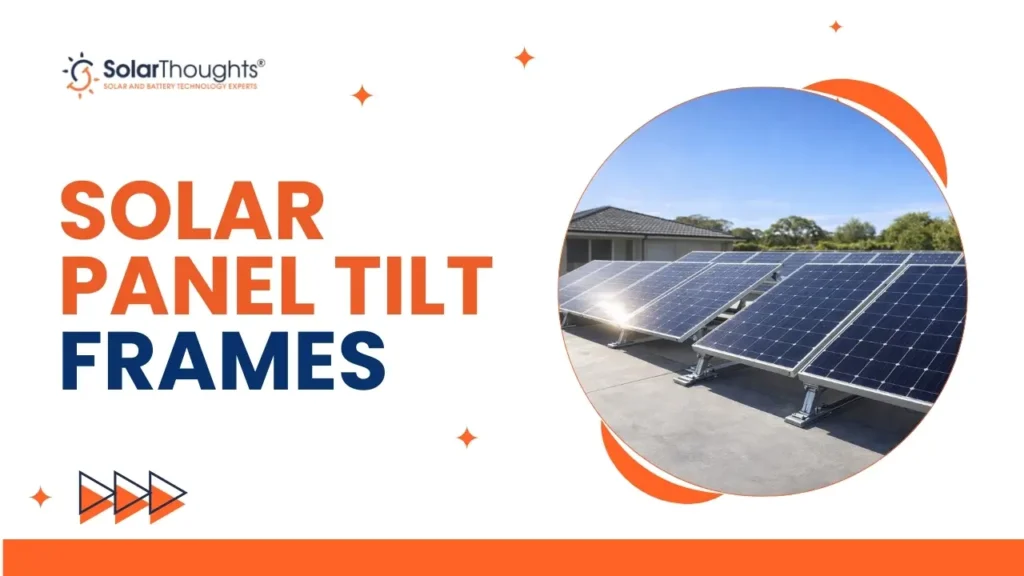
At SolarThoughts®, we know homeowners want practical advice before investing in solar. One of the most common questions we receive is whether Solar Panel Tilt Frames are worth the additional cost.
Tilt frames can slightly improve solar panel performance, but whether they deliver real value depends on your roof layout, available space, and energy usage patterns. In some cases, installing additional panels may provide better financial returns than investing in tilt hardware.
Table of Contents
ToggleIf you are planning a solar installation in 2026, understanding how tilt angles affect solar production can help you make a smarter decision.
What Are Solar Panel Tilt Frames?
Solar Panel Tilt Frames are mounting structures designed to position solar panels at a specific angle. This angle allows panels to capture more sunlight throughout the year.
For example, in Brisbane, the ideal solar panel tilt angle is around 27 degrees. When panels are installed flat or on low-pitch roofs, they may produce slightly less energy compared to panels installed at the optimal tilt.
Tilt frames can help:
- Improve panel alignment with sunlight
- Increase airflow beneath the panels to reduce heat buildup
While these advantages may improve system efficiency, the financial benefit depends on your specific installation conditions.
If you are planning a new system in gold coast, you can explore our solar panel installation services to understand how system design affects performance.
How Much Do Solar Panel Tilt Frames Cost?
The cost of Solar Panel Tilt Frames varies depending on system size and mounting design. On average, tilt frames add $25 to $40 per panel to the installation cost.
For a typical residential solar system, this could mean an additional $300 to $750 upfront.
Tilt frames also increase installation complexity. Installers must allow extra spacing between panel rows to prevent shading, and mounting structures must meet wind load requirements. This can increase installation time and labour costs.
Because of these factors, it is important to evaluate whether the performance improvement justifies the additional investment.
Do Solar Panel Tilt Frames Improve Solar Output?
Yes, tilt frames can increase solar energy production, but the improvement is generally modest.
Panels installed at an optimal tilt angle may generate 7 to 12 percent more annual energy compared to flat installations. The largest performance difference typically occurs during winter when the sun sits lower in the sky.
However, many real-world installations show that installing additional panels often produces better long-term results than investing in tilt frames.
For example, a larger flat system may produce more total energy than a smaller tilted system because more panels can fit on the roof.
If roof space allows, increasing system capacity can sometimes deliver faster payback periods.
Seasonal Performance Differences
Solar production changes throughout the year based on daylight hours and sun angle.
Summer months usually generate the most solar energy because sunlight is stronger and days are longer. Winter production tends to decrease as the sun sits lower in the sky.
Tilt frames can help maintain more stable performance during winter months by improving the angle of sunlight hitting the panels.
However, if most of your electricity usage occurs during summer due to air conditioning or cooling, the performance benefits of tilt frames may be limited.
Flat panel systems can still produce strong output during peak summer months.
Key Factors to Consider Before Installing Tilt Frames
Before choosing Solar Panel Tilt Frames, it is important to evaluate several practical factors.
- Available roof space
- Your seasonal electricity consumption
- Local wind conditions
- Budget and expected return on investment
Tilt frames require additional spacing between rows of panels to avoid shading. On smaller roofs, this may reduce the total number of panels that can be installed.
Wind load is another important consideration. Higher tilt angles can increase uplift forces during storms, particularly in coastal regions or areas with strong winds.
Proper engineering and professional installation are essential for safety and long-term durability.
When Are Solar Panel Tilt Frames Worth It?
Tilt frames may be beneficial in specific situations.
For example, they may make sense if:
- Your roof has limited space but requires improved winter production
- Your roof orientation prevents installing additional panels
- Your system design prioritises optimal tilt rather than maximum capacity
However, in many residential installations, adding extra panels provides better financial returns than installing tilt frames.
At SolarThoughts®, we evaluate each property individually to design solar systems that balance performance, cost, and long-term value.
Final Thoughts
Solar Panel Tilt Frames can improve system efficiency, especially during winter months. However, the overall increase in energy production is usually between 7 and 12 percent.
For many homeowners, investing in additional solar panels instead of tilt frames may deliver better long-term financial returns.
The best solution depends on your roof structure, available installation space, and energy usage habits. A well-designed solar system focused on return on investment often performs better than chasing the perfect tilt angle.
If you are considering solar installation or system upgrades in Gold Coast, the SolarThoughts® team can help design a system that maximises performance and long-term value.
Disclaimer: Energy production figures are estimates and may vary depending on roof design, weather conditions, equipment selection, and electricity usage patterns.
Our Popular Services
Solar panels Brisbane | Solar Panel Installation Services | Upgrading existing Solar system | Solar Panel Repairs and Maintenance | Solar Panel Cleaning Service | Solar Battery Installations | Solar Inverter Installations