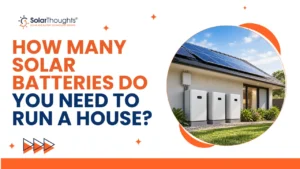
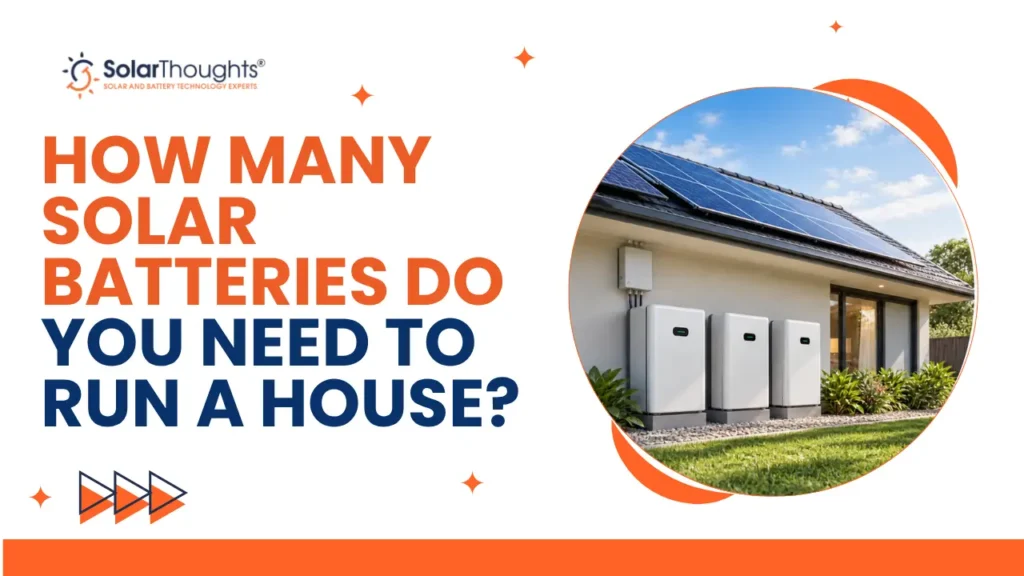
It sounds like a simple question, yet the answer trips up a lot of homeowners: how many batteries does it actually take to run your house? Quote one battery and you might fall short on a hot night. Quote three and you could be paying for storage you’ll never use.
Table of Contents
ToggleThe real answer depends on how much power you use and what you want the batteries to do. This guide shows you how many solar batteries you need to run a house in Brisbane, whether you just want evening backup or you’re aiming to go off-grid, so you buy the right amount of storage the first time.
How Many Solar Batteries Do You Need to Run a House?
For most Brisbane homes, one solar battery of around 10 to 13kWh is enough to run the house through the evening and overnight. If you want to power the whole home around the clock or go off-grid, you’ll typically need two to three batteries and a bigger solar array to keep them charged.
The key is being clear about what “run a house” means to you. Covering your evening and overnight use is very different from powering everything all day with no grid at all. Most people want the first, which a single well-sized battery handles comfortably.
This post focuses on the number of units you need. If you want the detail on capacity in kilowatt-hours, our companion guide on choosing the right solar battery size breaks that down.
How Much Electricity Does a Typical House Use?
The starting point for any battery decision is your daily electricity use, measured in kilowatt-hours. A typical Queensland home uses around 22kWh per day, which is a little higher than the southern states thanks to our air conditioning load.
That figure is an average, and yours could be well above or below it. A small household might use 12 to 15kWh a day, while a large family home with ducted air conditioning, a pool, and an EV can push past 30kWh. Your power bill shows your average daily use, which is the single most useful number for sizing storage. If you’re unsure how the units work, our guide on the difference between kW and kWh clears it up.
How Do You Work Out How Many Batteries You Need?
You can get a solid estimate in four steps using your power bill. It only takes a few minutes before an installer gets involved.
1. Find your daily usage. Take your average daily kWh from your power bill, or use 22kWh as a Queensland starting point.
2. Decide what you want to cover. Just the evening and overnight, or your full daily use for whole-home or off-grid.
3. Estimate the kWh you need stored. For evening and overnight, most homes use 10 to 15kWh after dark. For a full day, use your whole daily figure.
4. Divide by the battery size. Most home batteries hold 10 to 13.5kWh each, so divide your target by that to get the number of units.
As an example, a home using 22kWh a day that wants evening and overnight cover needs around 10 to 13kWh stored, which is one battery. The same home wanting full off-grid independence needs its whole daily use plus a buffer, which is where two or more batteries come in.
How Many Batteries to Cover Your Evenings and Overnight?
For the most common goal, covering your evening and overnight use, most Brisbane homes need just one battery of around 10 to 13kWh. This stores your surplus daytime solar and releases it after the sun goes down, which is exactly when grid power is most expensive.
This setup makes strong financial sense in 2026. With feed-in tariffs low, storing your solar and using it at night is worth far more than exporting it, as our guide on Queensland feed-in tariffs explains. A single battery covers the evening peak, the overnight base load, and the early morning before your panels wake up. Our guide on how long a battery lasts at night shows what one unit realistically delivers.
How Many Batteries to Run Your Whole House or Go Off-Grid?
Running your whole house around the clock, or cutting the grid entirely, is a bigger ask. For that, most homes need two to three batteries and a larger solar system to recharge them each day.
The reason is simple. Off-grid living means your storage has to cover your entire daily use plus a safety buffer for cloudy days, with no grid to fall back on. A Queensland home using 22kWh a day might need 30 to 40kWh of usable storage to do that reliably, which is two to three units. You also need enough panels to refill that storage even on an overcast day. Our guide on off-grid versus on-grid solar explains the trade-offs.
There’s a middle option many homeowners prefer: whole-home backup that stays grid-connected. This keeps your essential and even non-essential circuits running during a blackout without the cost of full off-grid independence. Our comparison of full versus partial home backup and guide on using solar during a power outage cover how that works.
What Size and How Many Units Does That Mean in Practice?
The table below turns daily usage into a practical number of batteries for the two most common goals. It assumes batteries of around 10 to 13kWh each.
| Daily usage | Evening + overnight | Whole-home / off-grid |
| 12 to 15 kWh (small home) | 1 battery (~10kWh) | 2 batteries |
| 20 to 22 kWh (average QLD home) | 1 battery (~13kWh) | 2 to 3 batteries |
| 30 kWh+ (large home, pool, EV) | 1 to 2 batteries | 3+ batteries |
As a rough rule, one battery suits most homes that want evening and overnight cover, while two to three suit whole-home or off-grid goals. Our guide on how many panels you need to run an air conditioner helps if cooling drives your evening load.
Does Your Solar System Size Affect How Many Batteries You Need?
Yes, and the two have to be matched. There’s no point having three batteries if your panels can’t generate enough to fill them each day, especially if you’re aiming for whole-home or off-grid use.
As a guide, a 6kW solar system pairs well with around 13kWh of storage, while larger systems support more. If you’re adding batteries to go off-grid, you’ll usually need to upsize your panels too, so the array can recharge the storage even on a cloudy day. Getting this balance right is exactly what a professional design delivers, and our roundup of the best solar battery brands in Brisbane helps you choose units that scale.
Want to know exactly how many batteries your home needs? Get a free battery assessment from SolarThoughts and we’ll size it to your actual usage.
What Does It Cost, and Is the Rebate Worth It?
More batteries mean more cost, so the number you choose has a real budget impact. One battery is the affordable entry point that suits most homes, while two or three units for whole-home or off-grid use is a larger investment.
The good news is that the federal Cheaper Home Batteries rebate takes roughly 30 percent off eligible installs, which makes adding storage far more attractive in 2026. Our guide on the Cheaper Home Batteries Program explains how it works and what changed. Because the rebate scales with capacity, it also helps offset the cost of a larger multi-battery setup.
For most people, one well-sized battery delivers the best return, covering the expensive evening peak without overspending on storage you rarely use. Scaling up to two or three units makes sense when backup or independence matters more than pure payback.
Common Mistakes to Avoid
Buying too few batteries for your goal. One battery covers an evening, but whole-home or off-grid use needs two or three. Be clear on what you want to power.
Oversizing without a reason. Three batteries for a home that only wants evening cover is money spent on storage you’ll rarely use.
Ignoring your solar size. Batteries you can’t recharge each day are wasted capacity, so panels and storage have to be matched.
Sizing off a single bill. Summer and winter usage differ, so use a full year of data to size storage accurately.
Forgetting the rebate scales. The Cheaper Home Batteries rebate grows with capacity, so factor it into the cost of a larger setup.
Frequently Asked Questions
How many solar batteries do you need to run a house?
Most Brisbane homes need one battery of around 10 to 13kWh for evening and overnight use, or two to three for whole-home or off-grid power.
How many kWh of battery do I need for my house?
Around 10 to 15kWh covers most homes overnight. For full off-grid use, you need your whole daily usage plus a buffer, often 30 to 40kWh.
How many batteries to go off-grid in Australia?
Usually two to three batteries, plus a larger solar system to recharge them, since there’s no grid to fall back on.
Is one solar battery enough for a house?
For evening and overnight use, yes, one well-sized battery suits most homes. Whole-home or off-grid use needs more.
How much electricity does a Queensland home use per day?
Around 22kWh on average, though small homes use less and large homes with air conditioning, a pool, or an EV use much more.
How many batteries do I need for whole-home backup?
Typically two to three, depending on your usage and how many circuits you want to keep running during a blackout.
Does my solar system need to be bigger for more batteries?
Usually yes. More storage needs more generation to refill it each day, especially for off-grid setups.
How many Tesla Powerwalls do I need?
Most homes need one for evening cover. Whole-home or off-grid goals often need two or more, depending on daily usage.
Is it cheaper to have one big battery or several?
It depends on the brand and your goal. One right-sized battery is the best value for evening cover, while modular units suit scaling up.
Does the battery rebate cover multiple batteries?
The federal Cheaper Home Batteries rebate scales with capacity, so it helps offset the cost of a larger multi-battery setup.
Conclusion
So how many solar batteries do you need to run a house? For most Brisbane homes, one battery of around 10 to 13kWh covers the evening and overnight, which is what the majority of homeowners actually want. Powering the whole house around the clock or going off-grid takes two to three batteries and a larger solar system to keep them charged.
The right number always comes back to your daily usage and your goal, not a blanket rule. Get that match right, with the rebate factored in, and your storage delivers real savings and independence for years.
Ready to find your number? Contact SolarThoughts for a free battery sizing assessment and we’ll work out exactly how many batteries your Brisbane home needs.