If you installed a 6.6kW solar system in Brisbane back in 2018, it probably felt like one of the smartest decisions you’d made. Your bills dropped, the feed-in tariff was decent, and the system paid for itself sooner than you expected.
Table of Contents
ToggleThe energy market in South East Queensland looks very different in 2026. Feed-in tariffs on standard plans have fallen as low as 5c/kWh, while grid power after dark now costs around 30c/kWh. On top of that, most households use more electricity in the evening than they used to, thanks to EVs, working from home and bigger appliances.
A system built to push as much power as possible back to the grid during the day just isn’t the best setup anymore. This guide walks you through how to upgrade your Brisbane solar system in 2026, including what to check first, which upgrade to do in which order, and how the new Energex export rules and the 44c tariff expiry affect your decision.
Why Do So Many Brisbane Solar Systems Need Upgrading?
Most Brisbane homes that installed solar before 2020 were designed around one idea: generate as much power as possible during the day and earn a solid return by exporting it. That made sense when feed-in tariffs paid 10 to 20c/kWh.
Today, the Queensland minimum feed-in tariff for Energex customers sits at 8.782c/kWh, and many retailers pay even less on standard plans. Meanwhile, buying power back from the grid in the evening costs 28 to 35c/kWh depending on your plan. So every kilowatt-hour you export earns a fraction of what you’ll pay to buy it back a few hours later.
Your system hasn’t broken. The rules around it have changed.
If you’re still on the original 44c Solar Bonus Scheme tariff, your situation is a little different, but only until 28 July 2028, when the scheme ends. After that, you’ll be on the same low export rates as everyone else. That makes 2026 and 2027 the ideal window to plan an upgrade that boosts self-consumption before the tariff disappears.
Does Upgrading Mean Starting from Scratch?
No, and it’s one of the most common misconceptions we hear at SolarThoughts site assessments across Brisbane.
Solar panels degrade slowly, usually losing less than 0.5% of their output each year. A system installed in 2016 is almost certainly still producing 95% or more of its original capacity, so the panels are rarely the weak link.
The parts that benefit most from an upgrade are the ones around the panels: the inverter, battery compatibility and your overall energy management setup. In most cases, a targeted upgrade delivers far better value than ripping out working panels and starting again.
The exceptions are systems that were undersized from day one, poorly installed, or fitted with panels from a brand that has since left the Australian market. A site assessment will tell you which situation you’re in.
Why Should You Check Your Inverter Before Anything Else?
Your inverter is the most important component to assess before you spend money on any upgrade, and it’s the one people overlook most often.
The inverter converts DC power from your panels into AC power your home can use. It also manages how energy moves between your panels, the grid and any battery you connect. If it’s outdated or can’t work with modern batteries, your whole system is held back, no matter how good your panels are.
Most inverters installed before 2019 are standard string inverters built for a simple job: convert solar power and send the excess to the grid. They usually don’t support batteries, detailed monitoring or the energy management features a modern solar and storage system needs.
Here’s the catch. You can’t add a DC-coupled battery to an incompatible inverter. If you buy the battery first, you’ll end up paying for two separate jobs: the battery, then the inverter replacement that should have happened first.
Swapping an ageing string inverter for a modern hybrid inverter unlocks battery compatibility, gives you real-time monitoring and sets your system up for future expansion. For a closer look at whether a hybrid inverter suits your home, read our hybrid inverter Brisbane guide.
How Does the Energex Export Limit Update Affect Your Upgrade?
Most Brisbane homes run on single-phase power, and Energex updated its export rules for these properties in 2026. Single-phase solar systems in most SEQ areas can now export up to 10kW to the grid, up from the old 5kW limit.
This matters for your upgrade in two ways. First, if you installed a 6.6kW system to stay under the old 5kW cap, you can now expand your array up to the new 10kW export limit, subject to inverter capacity and a technical assessment. Second, new hybrid inverters with export limiting can be set up to comply automatically, so you don’t need to limit output manually.
Three-phase homes have more flexibility and can usually access higher export limits. If your upgrade increases system capacity, talk to a CEC-accredited installer who can confirm the exact export limit for your property’s network connection.
What Are Your Upgrade Options as a Brisbane Homeowner?
Most solar upgrades fall into three categories, and you can combine them. The right order depends on your current system, how your household uses energy and what you want to achieve.
Adding a Battery
A battery stores the surplus solar you generate during the day so you can use it at night. If your home exports heavily between 10am and 3pm and then buys power back after 5pm, a battery fixes that mismatch directly.
The federal Cheaper Home Batteries Program cuts the upfront cost of an eligible battery by around 30%. As a CEC-accredited installer, SolarThoughts applies this discount at the point of installation across Brisbane, the Gold Coast, the Sunshine Coast and Ipswich.
There’s one condition: your inverter has to be compatible with the battery you choose. If it isn’t, the inverter gets upgraded first.
Replacing or Upgrading the Inverter
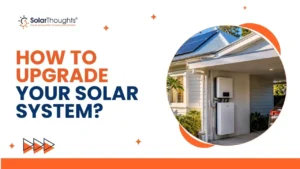
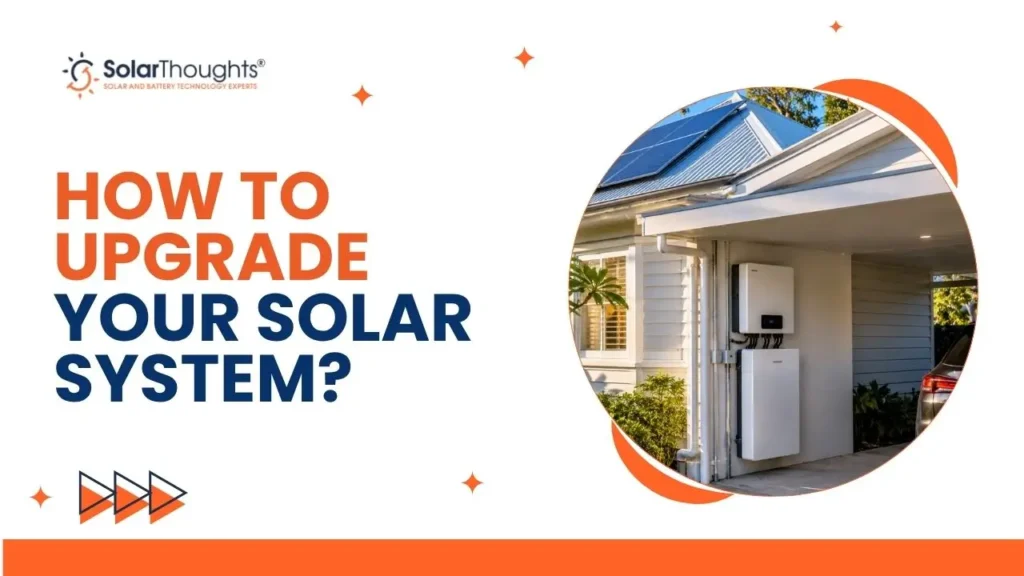
A modern hybrid inverter does a lot more than replace a failed unit. It makes your system battery-ready, gives you real-time monitoring through a smartphone app, manages self-consumption automatically and prepares your home for VPP participation.
SolarThoughts has installed Sungrow SH series and GoodWe ESA series hybrid inverters across Brisbane. At one Kenmore Hills home, we replaced the original 5kW string inverter with a Sungrow SH6.0RS hybrid inverter and added a 16kWh SBR modular battery in the same visit. You can read the full story in our solar system upgrade Queensland case study. We’ve also documented a Chapel Hill project with a 24kWh GoodWe ESA battery.
Adding More Solar Panels
If your daytime generation doesn’t cover your daytime use, or doesn’t leave enough surplus to charge a battery properly, adding panels is the logical next step. With the new 10kW single-phase export limit, many Brisbane homes that were capped at 6.6kW can now expand.
Most modern hybrid inverters support up to 150% panel oversizing relative to their AC output. That means a 6.6kW hybrid inverter can usually handle up to 10kW of panels, depending on roof space and orientation.
Which Upgrade Should You Do First?
It’s the question almost every Brisbane homeowner asks us, and the answer follows a simple logic.
| Your Situation | Start With |
|---|---|
| Inverter is over 7 years old or not battery-compatible | Inverter upgrade |
| Exporting heavily during the day, buying back at night | Battery (if your inverter is compatible) |
| Daytime solar doesn’t cover daytime use | More panels (after an inverter check) |
| Planning a battery within 1 to 3 years | Hybrid inverter now, battery later |
| On the 44c tariff that ends in 2028 | Plan battery and inverter before July 2028 |
| Inverter has failed and needs replacing | Replace it with a hybrid inverter |
The most common mistake is skipping the inverter check and going straight to buying a battery, only to find the existing inverter can’t support it. A qualified Brisbane installer can do that check in about 15 minutes, and it can save you a costly redo.
Thinking about upgrading your Brisbane solar system? Book a free site assessment with SolarThoughts. Our CEC-accredited installers cover Brisbane, the Gold Coast, the Sunshine Coast and Ipswich. Call 1300 846 844 or contact us online.
What Mistakes Do Brisbane Homeowners Make When Upgrading?
Buying a battery before checking the inverter. A DC-coupled battery needs a compatible hybrid inverter. If you buy the battery first and your inverter can’t support it, you’ll pay for an inverter replacement on top, when the two jobs could have been bundled from the start.
Assuming the 44c tariff means you don’t need to upgrade. The Solar Bonus Scheme ends on 28 July 2028. If you wait until then, you’ll be upgrading under time pressure, you could miss out on the federal battery rebate if the program changes, and you’ll lose two years of extra self-consumption savings.
Choosing a battery that’s too big for your solar array. A 13.5kWh battery paired with a 6.6kW system in Brisbane may never fully charge in winter or on cloudy days. Your battery size should match your actual solar surplus, and a site assessment confirms the right fit before you buy.
Ignoring the switchboard. Solar installations in Australia after May 2026 must comply with AS/NZS 61439, which includes updated RCD and SPD requirements. Older switchboards may need an upgrade as part of any expansion, and a proper assessment flags this before work starts, not halfway through.
Picking the cheapest quote without checking credentials. Any upgrade that adds capacity, replaces an inverter or installs a battery must be done by a CEC-accredited installer. That’s what keeps your product warranties intact and gives you access to government rebates, so always check accreditation before you sign.
Frequently Asked Questions
Can I upgrade my solar system without replacing the panels?
Yes, in most cases. Panels degrade slowly and usually last 25 years or more, so most upgrades (adding a battery, replacing the inverter or expanding the array) keep your existing panels in place.
How do I know if my inverter needs replacing?
Common signs include no monitoring capability, regular error codes, a system that’s more than 8 years old and no support for battery storage. A site assessment will confirm whether you need a replacement.
Can I add more solar panels to my existing Brisbane system?
Often, yes. It depends on your inverter capacity and available roof space. With the Energex single-phase export limit now at 10kW for most SEQ properties, many homes that were previously capped can expand.
Should I upgrade before or after the 44c Solar Bonus Scheme ends?
Before. The scheme ends on 28 July 2028, and upgrading early lets you set up your inverter and battery for self-consumption while you’re still earning the higher tariff, rather than rushing once the rate drops.
What is the federal battery rebate, and does it apply to Brisbane upgrades?
The Cheaper Home Batteries Program reduces the installed cost of an eligible battery by roughly 30%. Most quality battery additions in Brisbane qualify when a CEC-accredited installer does the work.
Does adding a battery affect my existing solar warranty?
Only if it’s installed incorrectly or by a non-accredited installer. A battery added properly by a CEC-accredited installer won’t void your panel warranties.
How long does a solar upgrade take?
An inverter replacement takes one day. Adding a battery alongside an inverter upgrade usually takes one to two days, and adding extra panels is typically a single-day job if no switchboard work is needed.
What is the payback period for a solar upgrade in Brisbane?
A battery on a home with high evening usage typically pays for itself in five to seven years after the CHBP rebate. An inverter upgrade that improves self-consumption can pay back in three to five years.
Do I need a new switchboard to upgrade my solar system?
Not always. You’ll need one if your current board doesn’t meet today’s compliance standards or can’t handle the extra load, and a qualified electrician checks this during the site inspection.
Can SolarThoughts help with all types of solar upgrades in Brisbane?
Yes. We handle inverter replacements, battery additions, panel expansions and full system upgrades across Brisbane, the Gold Coast, the Sunshine Coast and Ipswich, and every job is completed by CEC-accredited installers.
Is Now the Right Time to Upgrade?
If your system went in before 2020, the answer is almost certainly yes, and 2026 is a particularly good time to act. The federal battery rebate has made storage far more affordable, and the new Energex export limits make room for bigger systems on single-phase connections. If you’re still on the 44c Solar Bonus Scheme, the 2028 expiry gives you a clear deadline to get a self-consumption setup in place.
Start by finding out what your current system can support. Once you know that, the right path (inverter, battery, panels or all three) becomes clear.
Ready to upgrade your Brisbane solar system? Contact SolarThoughts for a free site assessment and a no-obligation quote. Call 1300 846 844 or get in touch online. Our CEC-accredited installers service Brisbane, the Gold Coast, the Sunshine Coast and Ipswich.