Table of Contents
ToggleIt’s a question we hear a lot from Brisbane homeowners after a year or two with solar. The system is working well, but your electricity use has grown. Maybe you’ve bought an EV, installed ducted air conditioning, or the kids are now home all day, and your current setup just doesn’t cover it anymore.
So can you simply add more panels to what’s already on the roof? Often, yes. But a few things need checking first, including your inverter’s spare capacity, Energex’s export rules, panel compatibility and, for some homes, your current tariff.
This guide walks you through each one so you can make an informed decision before you call an installer.
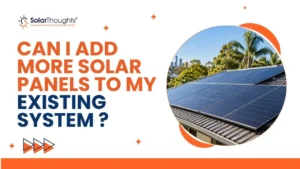
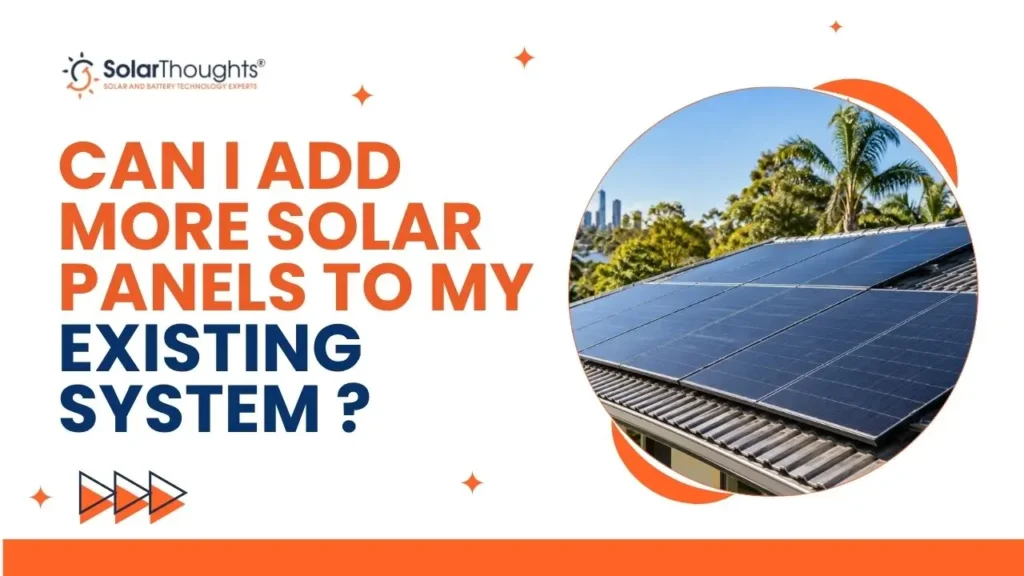
[IMAGE 1: Brisbane home with an existing rooftop solar array and space for more panels. ALT: “Add more solar panels to existing system Brisbane”]
What Needs to Be Checked Before You Add Panels?
Adding panels isn’t as simple as bolting a few more onto the roof and wiring them in. Four things need to be assessed first, and any one of them can change the recommendation.
1. Inverter DC Headroom
Every inverter has a maximum DC input, which is the total panel wattage it can accept. Under the Clean Energy Regulator’s rules for STC eligibility, most Australian homes can oversize their panels to 133% of the inverter’s rated AC output. That means a 5kW inverter can usually support up to 6.6kW of panels, and a 6.6kW inverter can support about 8.8kW.
If your system is already at that limit, which is true for most standard 6.6kW systems on a 5kW inverter, there’s no room left under the standard rule. To add panels, you’d need to either replace the inverter with a larger model or move to a hybrid inverter that allows a higher DC input once a battery is added.
2. MPPT Inputs
MPPT (Maximum Power Point Tracker) inputs determine how your panel strings connect to the inverter. An inverter with two MPPT inputs can take two independent strings, which helps when new panels face a different direction or don’t perfectly match the old ones.
With only one MPPT input, every panel on that string needs to be identical or very closely matched. If you mix panels of different wattages, ages or brands on one string, the whole string performs at the level of the weakest panel.
3. Energex Export Limits in Brisbane
Every solar system on the Energex network in South East Queensland has an export limit, which is the most power it can send to the grid at any moment. For most single-phase homes, the standard fixed limit is 5kW per phase.
Energex also offers a Dynamic Connection for eligible properties. With dynamic export, your limit moves between 1.5kW and 10kW per phase in real time, depending on local grid capacity. You’ll need a compatible, internet-connected inverter that supports the CSIP-AUS protocol, and most modern Sungrow and GoodWe hybrid inverters do. Your installer handles the application.
If you’re expanding from 6.6kW to 10kW, it makes sense to apply for a dynamic connection at the same time. That way your extra panels can contribute fully instead of running into the fixed export cap during peak production.
4. The 44c Solar Bonus Scheme Complication
This one matters most if you’re still on the Queensland government’s 44c Solar Bonus Scheme feed-in tariff.
Changing your system, including adding panels, can trigger a reassessment that cancels the legacy tariff and moves you to the current standard rate of 5 to 10c/kWh. For a home exporting 10kWh a day, dropping from 44c to around 8c is a big hit to your yearly feed-in income.
If you’re on the 44c tariff, check the conditions for your connection with your retailer before approving any changes. The scheme ends on 28 July 2028 regardless, so if you’re within two years of that date, expanding may still be worth it. Just make the call knowing the tariff risk.
How Many Panels Can You Add Under the Oversizing Rules?
The Clean Energy Regulator sets how far your panel array can exceed your inverter’s capacity while still qualifying for Small-scale Technology Certificates (STCs), the federal rebate that lowers upfront system cost.
Without a DC-coupled battery, your maximum panel capacity is 133% of the inverter’s rated AC output. That’s why 6.6kW of panels on a 5kW inverter is the most common home solar setup in Australia. It hits the maximum oversizing ratio and still qualifies for STCs.
| Inverter Size | Max Panels (No Battery) | Common Use |
|---|---|---|
| 5kW | 6.6kW | Standard Brisbane homes |
| 6.6kW | 8.8kW | Growing household demand |
| 8kW | 10.6kW | High-use homes |
| 10kW | 13.3kW | Large homes and small businesses |
Once you add a DC-coupled battery, the 133% rule no longer applies. The Clean Energy Regulator recognises that a battery helps you use more of what you generate, so your panel limit becomes the inverter manufacturer’s maximum DC input rating, which is often much higher. It’s one reason why upgrading to a hybrid inverter while expanding your array is often the most efficient approach.
Can You Mix New Panels with Old Ones?
You can add panels of a different brand, wattage or generation, but it takes careful design. Panels on the same MPPT string need to be matched as closely as possible, and there are three practical ways to handle a mismatch.
If your inverter has an unused second MPPT input, your installer can wire the new panels into it as a separate string. They’ll run independently and won’t drag down your existing array.
Another option is fitting microinverters to the new panels so each one optimises its own output. This adds cost per panel, but it removes the mismatch problem when your inverter has a single MPPT or is already at capacity.
Finally, if your inverter is nearing the end of its life anyway, replacing it with a modern hybrid model while adding panels solves the compatibility issue. You also get battery-readiness and better monitoring in the same job.
[IMAGE 2: SolarThoughts installer checking inverter specifications on an existing Brisbane system. ALT: “SolarThoughts installer Brisbane solar panel expansion inverter check”]
When Does Adding More Panels Make Sense?
Adding panels is usually the right move in these situations:
- Your energy use has grown. A new EV, ducted air conditioning, a pool pump or a household that’s home all day can push daytime use beyond what your original system was built for.
- Your system was sized conservatively. A 5kW inverter with only 5kW of panels still has 1.6kW of headroom under the standard rule, so adding a string of 4 to 6 panels may be possible without touching the inverter.
- You’re adding a battery as well. Installing a hybrid inverter and battery while expanding your array means one site visit and one DNSP application, and the DC-coupled battery removes the 133% panel cap.
- Your inverter needs replacing anyway. If it’s over 10 years old, replacing it with a larger hybrid model and adding panels in one project makes more sense than a like-for-like swap.
When Is Adding Panels the Wrong Move?
Adding panels isn’t always the best option. Think twice in these situations:
- Your inverter is at capacity and still has years left. Replacing a working 3-year-old inverter just to make room for panels rarely pays off. An AC-coupled battery that shifts your existing surplus into the evening may give you better value.
- Your roof space or orientation isn’t ideal. Panels on west or south-facing roofs produce much less than north-facing ones. If the only space you have is heavily shaded or faces south, the return may not be worth it.
- You’re still on the 44c tariff. Check the tariff implications before you change anything.
- Your existing panels are underperforming. If your current panels are degrading faster than they should, adding more won’t fix the real problem. A full system assessment is the better first step.
Thinking about expanding your Brisbane solar system? Book a free site assessment with SolarThoughts. Our CEC-accredited installers cover Brisbane, the Gold Coast, the Sunshine Coast and Ipswich. Call 1300 846 844 or contact us online.
How Does a Panel Expansion Work in Brisbane?
A panel expansion in Brisbane follows a clear process. Knowing it helps you understand what to expect and what to ask when you’re getting quotes.
Step 1: Site Assessment
A CEC-accredited installer looks at your existing system, including the inverter model and DC input capacity, MPPT setup, panel specifications, roof space and orientation, and your current Energex connection. This tells you what expansion is technically possible.
Step 2: Design and DNSP Application
Your installer designs the expanded system and lodges a connection application with Energex if needed. If you’re applying for dynamic export, this includes submitting your inverter’s compliance documents. Most applications are processed within a few weeks.
Step 3: STC Calculation
Your installer works out the STCs available for the added panel capacity and applies the rebate to your quote.
Step 4: Installation
The new panels are installed, wired to your existing or replacement inverter and commissioned. The system is then tested against AS/NZS 4777 requirements before handover.
Step 5: Monitoring Setup
If you’ve upgraded your inverter or added a new monitoring system, your installer walks you through the app. This sets a generation baseline for your expanded system.
[IMAGE 3: Completed Brisbane solar panel expansion with new panels installed alongside the original array. ALT: “Completed solar panel expansion Brisbane SolarThoughts”]
Frequently Asked Questions
Do I need council approval to add solar panels in Brisbane?
In most cases, no. Adding panels to an existing home system in Brisbane counts as minor building work and doesn’t need development approval, as long as it complies with AS/NZS 4777 and Energex connection requirements. Heritage-listed properties may have extra considerations.
Will adding panels void my existing solar warranty?
Only if the work is done incorrectly or by a non-accredited installer. A properly designed expansion by a CEC-accredited installer that stays within your inverter’s DC input limits won’t void your panel or inverter warranty.
Can I add panels if my original installer has closed down?
Yes. A new CEC-accredited installer can assess your system and manage the expansion. They can’t honour the original workmanship warranty, but they can design a compliant expansion and lodge the Energex application.
How many panels can I add to my 6.6kW system in Brisbane?
A 6.6kW system on a 5kW inverter is already at the 133% oversizing limit, so you can’t add panels under the standard STC rule without changing the inverter. To expand, you’ll need a larger inverter or a DC-coupled battery, which removes the 133% cap.
Does Energex need to approve the panel expansion?
Yes, for any change that increases your system’s capacity or modifies its connection. Your installer lodges the updated application, and if you’re applying for dynamic export, your inverter must support the CSIP-AUS protocol.
Will I earn more from the feed-in tariff with more panels?
Possibly, but only if your exports aren’t already capped. If your system regularly hits the 5kW export limit at peak times, extra panels just mean more power gets clipped by the inverter. In that case, a battery that stores the excess gives you better value than more panels alone.
Ready to Expand Your Brisbane Solar System?
The best place to start is a site assessment. It confirms what your inverter can handle, what Energex will approve and whether more panels, a battery or both will give you the better return.
SolarThoughts offers free site assessments across Brisbane, the Gold Coast, the Sunshine Coast and Ipswich. Each one covers your inverter capacity, MPPT setup and Energex export limit, and ends with a clear recommendation on your best path forward.
Contact SolarThoughts today for a free, no-obligation assessment. Call 1300 846 844 or get in touch online.