Brisbane homeowners installed more rooftop solar per capita than almost anywhere else in Australia during the 2010s. If your system went up between 2010 and 2018, it’s now somewhere between 8 and 16 years old, and it’s fair to wonder how much life it has left.
Table of Contents
ToggleThe honest answer is that quality solar panels in Brisbane usually last 25 to 30 years, and many keep generating well beyond that. But lasting isn’t the same as performing like new. Panels slowly produce less over time, and Brisbane’s climate speeds that up compared with cooler southern states.
Understanding how this works helps you make smarter decisions about maintenance, upgrades and when to replace your system.
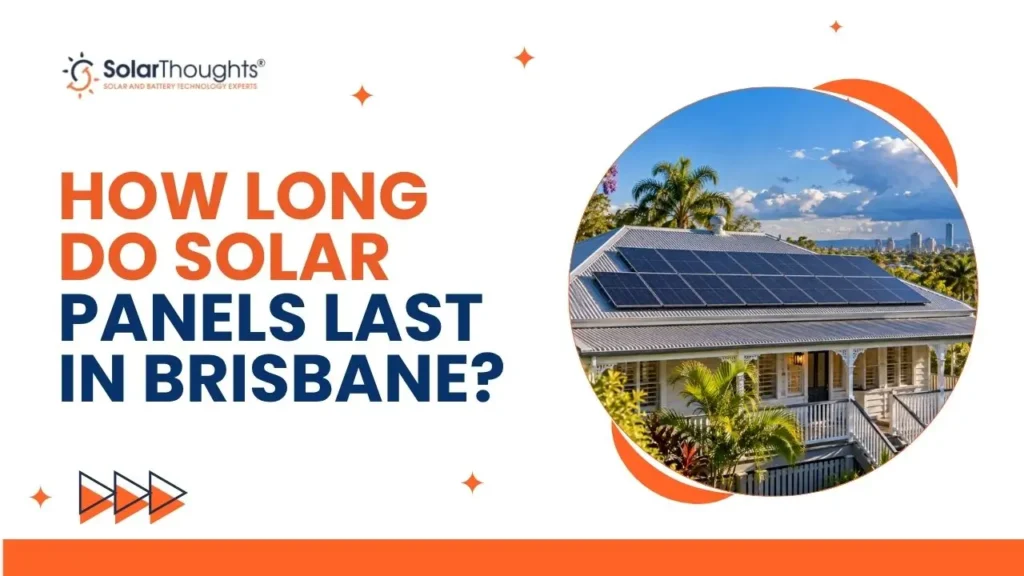
[IMAGE 1: Brisbane home with an established rooftop solar system under clear sky. ALT: “How long do solar panels last Brisbane”]
What Does “Lasting 25 Years” Actually Mean for a Brisbane Home?
Solar panels don’t switch off at year 25. There’s no single moment when they stop working and need replacing. Instead, they produce a little less each year through a process called degradation.
The industry treats a panel’s useful life as ending when its output drops below 80% of its original rated capacity. Most manufacturer performance warranties are built around this, guaranteeing at least 80 to 85% of rated output by year 25.
Here’s what that looks like in practice. A 400W panel degrading at the industry-standard rate would still produce around 350W at year 25. That’s a useful amount of power, which is why many homeowners keep older panels running, especially if they’ve already upgraded the inverter and the rest of the system works well.
Whether you should replace ageing panels comes down to three things: how much your output has actually dropped, what modern panels could produce in the same roof space, and whether your overall system still suits how you use energy today.
How Fast Do Solar Panels Degrade in Brisbane’s Climate?
This is where Brisbane differs from the national average, and where panel quality matters most.
Research from the National Renewable Energy Laboratory (NREL) puts the average degradation rate at about 0.5% per year after the first year. That figure is averaged across many climates, though. Studies comparing warm and cool locations consistently show faster degradation in hotter, high-UV environments, typically 0.7 to 0.9% per year compared with 0.45 to 0.55% in cooler climates.
Brisbane’s hot summers, intense UV and seasonal storms put it firmly in the tougher category for panel durability. Over 25 years, that adds up:
| Degradation Rate | Output at Year 10 | Output at Year 20 | Output at Year 25 |
|---|---|---|---|
| 0.35% (premium panels) | 96.6% | 93.2% | 91.6% |
| 0.50% (standard Tier 1) | 95.1% | 90.5% | 88.2% |
| 0.70% (budget panels, hot climate) | 93.2% | 87.0% | 83.9% |
| 1.00% (poor quality, hot climate) | 90.4% | 81.8% | 77.8% |
So choosing between a premium and a budget panel in Brisbane isn’t just about brand preference. Over 25 years in SEQ conditions, a well-chosen panel can generate noticeably more electricity than a cheaper one that wears out faster in the heat.
Every panel also has its biggest drop in the first year, usually 1 to 2%. This is called Light-Induced Degradation (LID), and it happens as the silicon cells settle after their first exposure to sunlight. After that, degradation slows down and follows the steady pattern shown in the table.
What Are the Biggest Factors Affecting Panel Lifespan in Brisbane?
Panel Quality
Panel quality has the biggest influence on lifespan. Premium panels from established manufacturers are built with tighter tolerances, better encapsulants and more rigorous UV and heat testing. They hold up better against the microcracks, moisture and UV discolouration that speed up degradation in Brisbane.
The manufacturer’s staying power matters too. A warranty is only worth something if the company behind it is still operating in Australia, so choosing a brand with a committed local presence protects you over a 25-year system life.
Installation Quality
Poor installation is one of the main causes of early panel failure. Microcracks from rough handling, poor roof ventilation that makes panels run hotter, and weak mounting that lets panels flex in storm winds all cause damage that builds up over the years.
Every SolarThoughts installation is carried out by CEC-accredited installers. That’s an industry requirement for warranty validity, and it’s also a practical sign of competence.
Brisbane’s Climate
UV intensity. Queensland has some of the highest UV levels in Australia. Over time, UV breaks down the encapsulant layer between the glass and the cells, causing discolouration and letting less light through. Premium panels use UV-stabilised encapsulants made for high-sun environments.
Summer heat. Roof surfaces in Brisbane regularly pass 60°C in summer. That heat drives constant expansion and contraction, which stresses cell connections and frame seals. Panels with a low temperature coefficient cope better with these conditions.
Storms and hail. SEQ’s storm season is no joke. Most quality panels meet IEC hail standards (25mm hailstones at 23m/s), but bigger storms can still cause damage. SolarThoughts offers post-storm inspections for Brisbane homeowners after major weather events.
Humidity and the coast. If you live within a few kilometres of Moreton Bay or the coast, you need panels with corrosion-resistant frames and connectors. Salt air speeds up corrosion of mounting hardware and electrical connections, so our site assessments factor in how close you are to the coast.
Maintenance and Monitoring
Leaving your system completely alone has a cost. Dust, bird droppings and grime reduce output and can cause uneven heating, known as hot spots, that stress cells over time. For most Brisbane homes, a clean every one to two years and a professional inspection every three to five years is a sensible baseline.
Modern Sungrow and GoodWe inverters come with monitoring apps that track your daily generation. Once you know what your system normally produces, you can spot a drop early instead of finding out months later through higher power bills.
[IMAGE 2: Close-up of a clean, well-maintained solar panel surface in Brisbane sunlight. ALT: “solar panel condition Brisbane maintenance lifespan check”]
Why Will Your Inverter Need Replacing Before Your Panels?
This surprises a lot of Brisbane homeowners, but your inverter will almost certainly wear out long before your panels do.
Standard string inverters, the most common type on Brisbane homes, usually last 10 to 15 years. They work every hour the sun is up, converting DC power from your panels into AC power for your home, and their electronics wear out faster than the panels themselves. Most inverter warranties run for five to twelve years.
If you installed solar between 2010 and 2015, your inverter is probably at or near the end of its life right now, even if your panels are still in good shape. The upside is that replacing it with a modern hybrid inverter is also the easiest way to add a battery, improve monitoring and get more life out of your whole system.
Our solar system upgrade guide for Brisbane explains when an inverter replacement makes sense as your first step rather than an unwanted expense.
What Does the 44c Solar Bonus Scheme Mean for Older Systems?
If you’re still on the Queensland government’s 44c Solar Bonus Scheme, this section is for you. The scheme ends on 28 July 2028.
Systems on this tariff were installed between 2008 and 2012, so they’re now 14 to 18 years old. The panels are in the second half of their expected lifespan, and almost all of the inverters have reached or passed the end of their typical service life.
That makes 2026 to 2028 an important window. Getting a system assessment, replacing the inverter and possibly adding a battery before the tariff ends makes practical and financial sense. After July 2028, you’ll move to a standard feed-in tariff of 5 to 10c/kWh, and using more of your own solar through battery storage becomes the key to keeping your energy costs down.
Concerned about the age or condition of your Brisbane solar system? Book a free site assessment with SolarThoughts. Our CEC-accredited installers cover Brisbane, the Gold Coast, the Sunshine Coast and Ipswich. Call 1300 846 844 or contact us online.
What Do Solar Panel Warranties Actually Cover?
Knowing what your warranties cover helps you understand what protection you really have, and what the fine print means.
Product warranty. This covers manufacturing defects and physical failures, such as panels that crack, delaminate, corrode abnormally or stop working because of how they were made. It’s the warranty you’re most likely to claim on, and quality panels in 2026 carry product warranties of 12 to 25 years.
Performance warranty. This guarantees your panels will still produce a set percentage of their rated output at a certain point, usually 80 to 85% at year 25. When comparing brands, the warranted yearly degradation rate tells you more than the headline performance warranty.
Workmanship warranty. This comes from your installer, not the manufacturer, and covers problems caused by how the system was installed. Quality Brisbane installers usually offer five to ten years. This is where an installer’s reputation matters, because a company that’s been operating locally for years is far more likely to honour a claim than one that popped up recently.
Frequently Asked Questions About Solar Panel Lifespan in Brisbane
Do solar panels last longer in Brisbane or Melbourne?
Melbourne’s cooler climate leads to slightly slower degradation for panels of the same quality. The difference is real but manageable if you choose quality panels, and Brisbane’s stronger sunshine means each panel generates more power over its life, which often more than makes up for it.
Can I tell if my panels are still performing properly?
Your inverter’s monitoring data is the most reliable way. Compare your current daily generation with the same period in previous years, allowing for seasonal changes, and look into any big, ongoing drop. If your inverter has no monitoring at all, that’s often a sign your system is due for an upgrade.
Do panels need replacing after 25 years?
Not automatically. If your panels are still producing well above 80% of their rated output and the system still suits your needs, it’s perfectly reasonable to keep them. The decision depends on your measured output, whether a modern system would save you noticeably more and whether other parts need attention.
What happens if my panel manufacturer no longer operates in Australia?
Warranty claims become much harder. That’s one of the best reasons to choose a manufacturer with a long-term Australian presence and local distributor support. CEC product approval is the minimum, but a brand’s track record and local support go further.
How do I know if my panels have hail or storm damage?
You can sometimes see cracks in the glass up close, but internal damage often isn’t visible. A professional thermal imaging inspection can find hot spots where damaged cells are producing heat instead of electricity, and SolarThoughts offers post-storm inspections across South East Queensland.
Should I clean my Brisbane solar panels?
Yes, but you don’t need to overdo it. A rinse with a garden hose once or twice a year is enough for most suburban homes, and avoid pressure washers because they can damage the seals. If you live near a busy road, an industrial area or under trees, you may need to clean more often.
What is the best panel brand for Brisbane’s climate?
Brands that consistently perform well in hot, high-UV Australian conditions include Longi, Canadian Solar, Trina and REC. At SolarThoughts, we choose panels to suit each home’s specific conditions during the site assessment rather than recommending one brand for everyone.
Will my panels still work after 30 years?
Almost certainly, just at lower output. Solar systems installed in Australia in the 1990s are still producing power today. Whether that output is worth keeping or it’s time to upgrade depends on your actual measured generation.
How does roof ventilation affect panel lifespan in Brisbane?
It makes a big difference, because cooler panels degrade more slowly. A gap between the underside of the panels and the roof lets air flow through and keeps temperatures down. Panels mounted flat against a low-pitch roof with no gap run hotter and wear out faster.
Is a professional inspection worth it for an older system?
Yes, especially if your system is more than eight years old. An inspection can pick up inverter problems, loose or corroded connections, mounting issues and performance drops that monitoring data alone may not explain. It also gives you documentation that helps with any warranty claim.
When Should You Start Planning a Solar System Upgrade in Brisbane?
If your system was installed before 2018, start keeping an eye on your output and book a site assessment before anything fails completely. If you’re still on the 44c tariff, the period before July 2028 is the ideal time to plan any major work.
For a full breakdown of your options, including inverter replacement, batteries and adding panels, read our solar system upgrade guide for Brisbane.
Ready to find out what condition your solar system is really in? Contact SolarThoughts for a free assessment. Our CEC-accredited installers service Brisbane, the Gold Coast, the Sunshine Coast and Ipswich. Call 1300 846 844 or get in touch online.