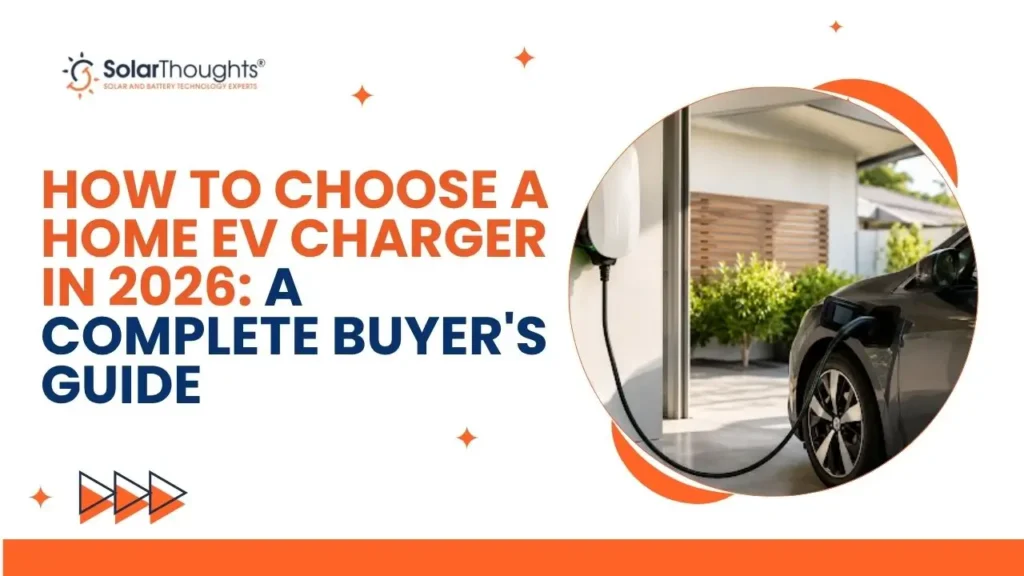
You’ve got the EV, or one’s on the way. Now you need to charge it at home without the guesswork. The trouble is that chargers throw a lot of jargon at you: kilowatts, phases, tethered, OCPP, solar mode.
This guide cuts through all of it. You’ll learn exactly how to choose a home EV charger for your Brisbane home in 2026, covering charging speed, your home’s power supply, smart features, solar charging, and what it all costs to install.
Key Takeaways
- Most homes are best served by a 7kW single-phase charger, which fully charges the average EV overnight.
- A 22kW three-phase charger is faster but only helps if your home has three-phase power and your car can accept it.
- The biggest long-term saver is a smart charger with solar integration, which lets you charge from your own rooftop power.
How to Choose a Home EV Charger: The Short Answer
To choose a home EV charger, match four things to your situation: charging speed (7kW suits most homes), your power supply (single or three phase), the smart features you’ll actually use, and whether you want solar charging. Get those right and installation is straightforward.
The rest of this guide walks through each decision so you buy once and buy right.
1. Charging Speed: 7kW vs 22kW
Charger speed is measured in kilowatts (kW). More kW means faster charging, but only up to what your car and your home can handle.
| Charger | Real-world charge added | Best for |
|---|---|---|
| 7kW (single phase) | ~40 km of range per hour | Most homes, overnight charging |
| 11kW (three phase) | ~60 km per hour | Bigger batteries, faster top-ups |
| 22kW (three phase) | ~120 km per hour | Multiple EVs, fast daytime charging |
Here’s the catch most buyers miss. A 7kW charger adds well over 250 km of range in a typical overnight session, which is more than enough for the average driver. And many EVs cap their AC charging at 7kW or 11kW anyway, so a 22kW charger often won’t charge any faster than an 11kW one.
Unless you drive huge distances daily or charge two cars, 7kW is the practical sweet spot. Our guide to the best home EV chargers for 2026 compares specific models.
2. Single Phase vs Three Phase Power
This is the deciding factor for many Brisbane homes. Your home has either single-phase or three-phase power, and it sets your ceiling.
A single-phase home (most older Queenslander homes) can run up to a 7kW charger. A three-phase home can run 11kW or 22kW units, like the GoodWe HCA G2 22kW model. If you’re not sure which you have, an electrician can check your switchboard in minutes.
Don’t upgrade to three phase just for an EV charger unless you have other reasons. For most households, 7kW single phase is plenty. Our guide on single phase vs three phase explains the difference in full.
3. Tethered vs Untethered, and Plug Type
Two quick practical choices.
Tethered chargers have a cable permanently attached, so you just grab it and plug in. Untethered (socketed) chargers need you to use your own cable each time, but keep the unit tidier and more future-proof. Most people prefer tethered for daily home use. Units like the GoodWe HCA and Fronius Wattpilot come with a Type 2 connector and around a 6 metre cable, which is the standard for almost all EVs sold in Australia.
4. Smart Features Worth Having
A “smart” charger connects to your home network and an app. The features that genuinely matter are:
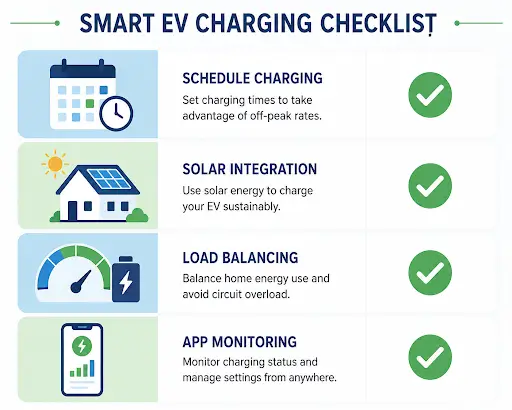
- Scheduling. Charge during off-peak hours or when your solar is running.
- Solar integration. Charge using surplus power from your panels (more on this below).
- Dynamic load balancing. Stops the charger overloading your main supply when the oven, aircon, and car all run at once. The GoodWe HCA G2 added this in its second generation.
- App monitoring. Track energy use and costs, like the GoodWe SEMS+ app or the Fronius Solar.wattpilot app.
Pro tip: If you have solar or plan to, prioritise a charger with true solar-surplus charging. It’s the one feature that keeps paying you back every sunny day.
5. Solar Integration
This is the feature that turns your EV into a car that runs on sunshine. A solar-capable charger detects when your panels produce more than your home is using, then sends that free surplus straight to your car.
Chargers like the Fronius Wattpilot Flex and GoodWe HCA G2 do this well, though both work best when paired with a compatible inverter (and, for GoodWe, a battery for full solar-only charging). We explain the mechanics in our post on charging your EV with solar energy.
What Does Installation Cost?
A home EV charger install in Brisbane typically costs $1,500 to $3,000 all up, including the unit and the electrical work. A basic 7kW install near your switchboard sits at the lower end, while three-phase units, long cable runs, or a switchboard upgrade push it higher.
The charger itself ranges from around $800 for a value 7kW unit to $2,000+ for a premium smart charger. Installation adds the rest.
Indicative 2026 pricing. Sources: SolarQuotes EV charger reviews and the Australian Government energy site.
Ready to charge at home the smart way? Get a free EV charger quote from SolarThoughts and we’ll recommend the right unit for your home and car.
Common Mistakes to Avoid
Overbuying on speed. Paying for 22kW when your car charges at 7 or 11kW wastes money for no benefit.
Ignoring your power supply. Buying a three-phase charger for a single-phase home means it won’t work as intended.
Skipping solar integration. If you have panels, a non-solar charger leaves free daytime energy on the table.
Forgetting load balancing. Without it, charging can trip your main breaker when big appliances run.
Choosing on price alone. A cheap charger with a two-year warranty and no app may cost more in the long run.
Frequently Asked Questions
Match the charging speed, your single or three phase supply, smart features, and solar charging to your home. For most, a 7kW smart charger is ideal.
Yes. A 7kW charger adds well over 250 km of range overnight, which covers the average driver comfortably.
Only if you have three-phase power and a car that charges above 7kW, or you charge multiple EVs. Most homes don’t need it.
It lets the charger use surplus power from your rooftop solar to charge your car, cutting or removing the grid cost.
Tethered is more convenient for daily home use. Untethered keeps the unit tidy and works with any Type 2 cable.
In Brisbane, expect $1,500 to $3,000 installed, depending on the unit, your power supply, and cable run.
Type 2, which is the standard AC connector for almost all electric vehicles sold in Australia.
A feature that adjusts charging power so the charger doesn’t overload your home’s supply when other appliances run.
No. Hardwired EV chargers must be installed by a licensed electrician to be safe and compliant.
One with true solar-surplus charging, such as the Fronius Wattpilot or GoodWe HCA, paired with a compatible inverter.
Conclusion
Knowing how to choose a home EV charger comes down to four decisions: speed, power supply, smart features, and solar integration. For most Brisbane homes, a 7kW smart charger with solar charging is the sweet spot, giving you overnight charging and the option to run on your own sunshine.
Get the match right and you’ll charge cheaply and reliably for years. Buy on price alone and you may pay for it later.
Not sure which charger suits your home and car? Contact SolarThoughts for a free EV charger assessment and we’ll size it up for you.