Two types of Brisbane homeowners walk away from a solar quote with the wrong inverter.
Table of Contents
ToggleThe first paid extra for a hybrid inverter they didn’t need. Their installer told them it was “future-proof.” Three years later, they still don’t have a battery, and the inverter they could have bought for $1,000 less would have done the job just as well.
The second system used a standard inverter to keep the initial cost lower. Later, when the homeowner decided to add a battery, they needed a DC-coupled setup that was not compatible with the existing inverter. This meant replacing the inverter in addition to the battery installation, increasing the overall cost of the upgrade.
Both situations happen regularly across Brisbane. Both are avoidable with the right information upfront.
This guide cuts through the sales pitch and gives the straight answer on what a hybrid inverter actually does, when it makes sense for a Brisbane home, and when it doesn’t.
What Is a Hybrid Inverter and How Is It Different from a Standard Inverter?
Every solar system needs an inverter. Solar panels produce direct current (DC) electricity, but homes run on alternating current (AC). The inverter converts DC to AC so the power is actually usable.
A standard string inverter does exactly that — and nothing else. It’s the most common type installed on Brisbane rooftops over the past decade, and it works well for a solar-only system.
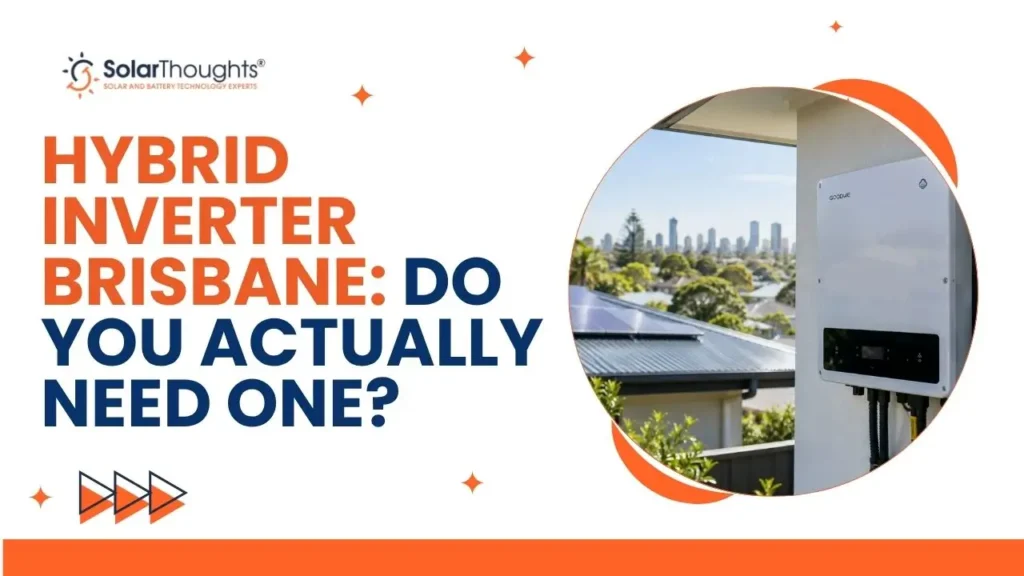
A hybrid inverter does the same conversion and also manages a connected battery. It pushes surplus solar power into the battery for storage and draws it back out when the sun goes down. Because it handles power flow in both directions in one unit, it’s also called a multi-mode inverter.
The key difference becomes important when adding a battery. In a DC-coupled battery system, the solar panels, inverter, and battery are connected through the same DC circuit. A compatible hybrid inverter can support this configuration, allowing energy to be managed with fewer conversion steps and potentially reducing conversion losses.
Does a Brisbane Home Actually Need a Hybrid Inverter to Add a Battery?
This is the most common question that comes up before a solar upgrade. The honest answer depends entirely on which type of battery is being considered.
There are two ways to connect a battery to a solar system.
DC-coupled batteries
In a DC-coupled system, the battery connects to a compatible hybrid inverter on the DC side. The inverter manages energy from both the solar panels and the battery within the same system. This configuration can reduce the number of energy conversion steps and may improve overall system efficiency. It can also provide a more compact installation. DC-coupled batteries require a compatible hybrid inverter or an inverter designed to support this configuration.
AC-coupled batteries
The battery has its own built-in inverter and connects on the AC side of the existing system. It’s compatible with almost any inverter already on the roof — including older standard string inverters. Batteries like the Tesla Powerwall 3 are AC-coupled. They don’t require a hybrid inverter, which means they can be retrofitted to an existing solar system without replacing the inverter at all.
For a Tesla Powerwall, BYD Battery-Box, or another AC-coupled battery — no hybrid inverter is needed. The existing inverter is compatible.
For a Sungrow SBR or GoodWe Lynx battery — DC-coupled systems — a compatible hybrid inverter is required. SolarThoughts has completed a Sungrow SH6.0RS hybrid inverter upgrade paired with 16kWh SBR battery storage and a 24kWh GoodWe ESA hybrid battery installation across Brisbane — both DC-coupled systems where a hybrid inverter was the right call from day one. Real project details are available on the SolarThoughts projects page and case study blog posts.
Is “Future-Proofing” with a Hybrid Inverter Really That Simple?
This is where the sales pitch and the on-the-ground reality often diverge.
The suggestion to install a hybrid inverter today and “bolt a battery on later” sounds logical. But there’s a caveat that doesn’t always make it into the sales conversation.
Battery technology moves fast. The battery that’s compatible with a hybrid inverter today may not be available — or even supported — in three to five years. Inverter manufacturers update firmware, change communication protocols, and discontinue compatibility with older battery models. It happens more than the industry likes to acknowledge.
This doesn’t make hybrid inverters a bad investment. It means homeowners should be clear-eyed about what they’re buying.
If battery storage is genuinely planned within one to three years, a hybrid inverter is a smart investment. If it’s a vague ‘maybe someday’ plan, the picture becomes murkier.
The cleanest approach — when battery storage is a real goal — is to install the hybrid inverter and battery together. The compatibility question disappears, the installation is done in a single visit, and the homeowner starts benefiting from day one.
When Does a Hybrid Inverter Make Clear Sense for a Brisbane Home?
A new solar system is being installed and battery storage is planned within 1 to 3 years
A hybrid inverter at installation costs $500 to $1,500 more than a standard string inverter. That’s significantly less than replacing a functioning standard inverter later — which means removing the old unit, rewiring for battery compatibility, and paying a second full installation fee. Installing the hybrid inverter upfront is almost always cheaper overall.
The existing inverter is failing or more than 10 years old
Solar inverters typically last 10 to 15 years. If an existing inverter is approaching end of life, replacing it with a hybrid model rather than another standard unit is the logical move — particularly given the current Brisbane energy economics.
Brisbane homeowners pay around 30c/kWh for grid electricity in the evening but earn only 5 to 10c/kWh for daytime solar they export. Every kilowatt-hour stored in a battery instead of exported is worth three to six times more. That gap makes battery storage genuinely compelling right now, and a hybrid inverter replacement puts the home in position to act on it.
Blackout protection is a priority
Brisbane’s storm season creates real grid disruptions. Cyclone Alfred in early 2025 knocked out power across large parts of South East Queensland for days. A hybrid inverter paired with a capable battery can keep lights, fridges, and essential appliances running during a grid outage — but only if the inverter model has genuine backup capability.
Not all hybrid inverters offer this, and backup capability varies significantly between models. Backup level should always be confirmed with the installer before purchase.
An older system is being upgraded with battery storage added at the same time
When upgrading existing solar and adding battery storage in the same project, a hybrid inverter is the natural choice. It’s the most efficient architecture for a modern solar-plus-storage system, and it opens access to Virtual Power Plant (VPP) programs — where the battery earns additional bill credits by supporting the grid during peak demand periods.
When a Standard Inverter Is Still the Right Call
Not every Brisbane home needs a hybrid inverter right now, and it would be dishonest to suggest otherwise.
If an existing solar system is less than five years old and performing well, replacing a functioning standard inverter purely to be ‘battery-ready’ is often unnecessary cost. An AC-coupled battery can be added later without touching the inverter.
If a homeowner is genuinely uncertain about battery storage over the next few years, a speculatively installed hybrid inverter adds upfront cost for a benefit that may not arrive. The better approach is an honest site assessment based on actual plans — not vague future intentions.
The right system is the one that matches the home’s real needs and budget, not the most expensive option on the quote sheet.
Hybrid Inverter vs Standard Inverter: Quick Comparison
| Feature | Standard Inverter | Hybrid Inverter |
| Converts solar DC to AC | Yes | Yes |
| Manages DC-coupled battery | No | Yes |
| Works with AC-coupled battery | Yes | Yes |
| Blackout backup | No | Some models — confirm with installer |
| Typical installed cost | $1,000 to $2,000 | $2,000 to $4,500 |
| Best for | Homes with no near-term battery plans | Homes adding DC-coupled storage now or soon |
| Upfront premium | Lower | $500 to $1,500 more than standard |
| Thinking about upgrading your inverter or adding battery storage? Get a free quote from SolarThoughts — CEC-accredited installers servicing Brisbane, Gold Coast, Sunshine Coast and Ipswich. Call 1300 846 844 Today. |
What About the Federal Battery Rebate?
The federal Cheaper Home Batteries Program, launched in July 2025, reduces the upfront cost of an eligible battery installation by roughly 30%. This has meaningfully strengthened the financial case for battery storage across Brisbane.
To claim the rebate, the battery must be installed by a CEC-accredited installer and meet the program’s eligibility requirements — including VPP capability. Most quality DC-coupled battery systems paired with a hybrid inverter meet these requirements, as do the leading AC-coupled batteries.
Which Hybrid Inverters Are Best for Brisbane Homes?
The hybrid inverters most frequently specified for Brisbane residential installations are the Sungrow SH series and the GoodWe ET/ESA series. Both are CEC-approved, widely supported across South East Queensland, and compatible with modular battery systems that can expand as household energy needs grow.
SolarThoughts has installed both across Brisbane, Gold Coast, Sunshine Coast, and Ipswich. Real completed projects are documented on the SolarThoughts projects page, with detailed case studies covering a Sungrow SH6.0RS hybrid with 16kWh SBR battery and a GoodWe ESA system with 24kWh storage.
Every home is different. Roof layout, current system age, energy usage, and battery goals all affect which inverter is the right fit. A site assessment gives a clear, specific recommendation rather than a generic one.
Frequently Asked Questions
What is a hybrid solar inverter?
A hybrid solar inverter converts DC power from solar panels into usable AC power for the home and also manages the charging and discharging of a connected battery. It combines the functions of a solar inverter and a battery inverter in one unit.
Do I need a hybrid inverter to add a battery to my existing solar system?
Only if the intended battery is DC-coupled. AC-coupled batteries — like the Tesla Powerwall 3 — include their own built-in inverter and are compatible with any existing standard inverter. DC-coupled batteries like the Sungrow SBR or GoodWe Lynx require a compatible hybrid inverter.
Is a hybrid inverter worth the extra cost in Brisbane?
If DC-coupled battery storage is planned within the next one to three years, yes — the upfront premium is almost always less than the cost of replacing a standard inverter later. If battery storage isn’t planned any time soon, the extra cost may not be justified.
Can a hybrid inverter keep a Brisbane home running during a blackout?
Some models can, but not all. The backup level of the specific inverter should be confirmed before purchase. Systems with Level 2 or Level 3 backup capability switch the home to battery power during a grid outage with no noticeable interruption — particularly useful during Brisbane’s storm season.
What’s the best hybrid inverter for a Brisbane home?
It depends on system size, energy usage, and battery choice. Sungrow and GoodWe are the most widely installed and supported brands in South East Queensland. A site assessment with a local CEC-accredited installer will give the most accurate recommendation for the specific home.
Can the federal battery rebate be claimed with a hybrid inverter system?
Yes, provided the battery meets the Cheaper Home Batteries Program eligibility criteria and is installed by a CEC-accredited installer. Most quality DC-coupled battery systems paired with a hybrid inverter qualify for the rebate.
How much does a hybrid inverter cost in Brisbane?
Installed hybrid inverters in Brisbane typically cost between $2,000 and $4,500 depending on brand, size, and installation complexity — around $500 to $1,500 more than a comparable standard string inverter.
Does a hybrid inverter work as a normal solar inverter if no battery is connected?
Yes. A hybrid inverter operates as a standard solar inverter when no battery is fitted. The battery can be added at a later stage when the homeowner is ready.
What’s the difference between a hybrid inverter and a microinverter?
A hybrid inverter is a central unit that manages the entire system. A microinverter is mounted beneath each individual solar panel and converts power at the panel level. Microinverters don’t manage battery storage directly — a separate battery inverter or AC-coupled battery would still be needed for storage.
Is a hybrid inverter guaranteed to be compatible with future batteries?
No. Battery and inverter technology evolves quickly, and compatibility can change. If battery storage is planned in the near term, installing the hybrid inverter now is the right approach. If the timeline is genuinely uncertain, an AC-coupled battery offers more flexibility when the time comes.
| Ready to find out if a hybrid inverter is right for your Brisbane home? Contact SolarThoughts for honest, no-pressure advice from local CEC-accredited installers. |
Pricing Disclaimer: The prices and cost estimates mentioned in this article are provided for general informational purposes only. Actual solar and battery system costs can vary depending on system size, equipment selected, installation requirements, site conditions, available rebates or incentives, and other factors. Please contact a qualified solar installer for a current quote based on your specific requirements.