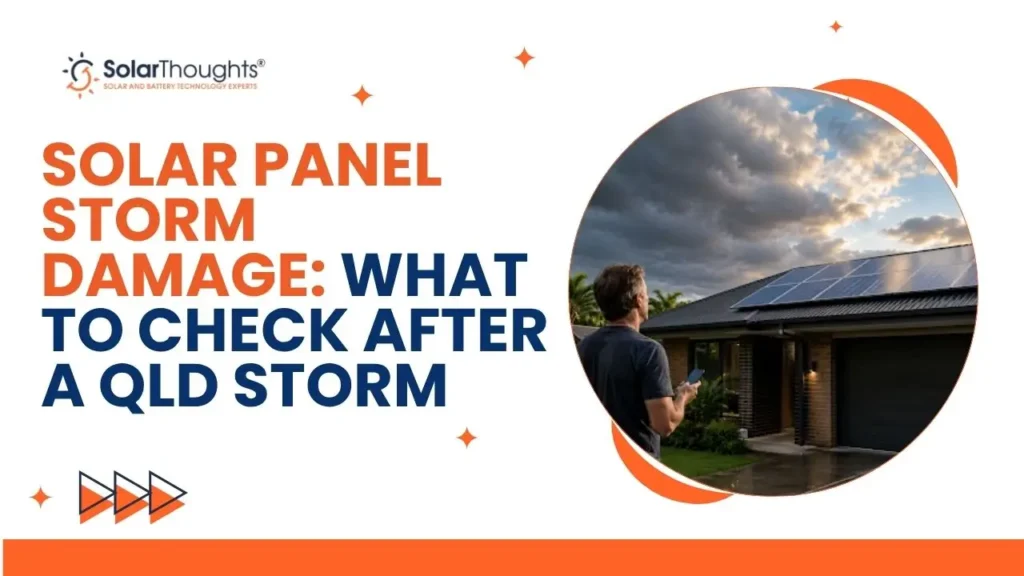
Queensland storm season is no joke. Hail the size of golf balls, wild winds, and driving rain roll through South East Queensland every summer, and your solar panels take the full brunt of it up on the roof.
So after the sky clears, what should you do? This guide gives you a safe, step-by-step checklist for solar panel storm damage: what to inspect, what never to touch, how to spot hidden faults, and how to claim on insurance if your system is hit.
Key Takeaways
- Check your inverter first after a storm. Error codes or red lights are the quickest sign of damage.
- Never climb on your roof to inspect panels. Cracked panels can be an electrical hazard, and microcracks aren’t visible anyway.
- Storm and hail damage is usually covered by home and contents insurance, not your panel warranty, so declare your solar to your insurer.
Are Solar Panels Built to Handle Storms?
Yes, mostly. Quality solar panels are made with tempered glass and are certified to withstand hail up to about 35mm, roughly golf-ball size, under Australian standards. Most storms pass without a scratch.
But Queensland is tougher than most. Parts of the state see five to ten hail days a year, and stones larger than 35mm, or debris carried by strong winds, can still cause damage. So while panels are tough, they aren’t indestructible, and a big storm is always worth a check.
Step 1: Check Your Inverter First
Your inverter is the smartest part of your system, and it usually knows before you do. After a storm, head to the inverter and look at the display.
Watch for red warning lights, error or fault codes, or a screen showing no power generation. Any of these can point to storm damage in the panels or wiring. If you see a fault, note the code and contact your installer. Our guide on fixing common solar panel problems explains what many codes mean.
Step 2: Inspect From the Ground Only
This is the rule that keeps you safe. Do not climb onto your roof after a storm. Wet, damaged panels can leak voltage, and a cracked panel is a genuine electrical hazard.
Instead, walk the perimeter of your house and look up from the ground. Obvious damage like shattered glass or visibly cracked panels can usually be seen from below. If you spot clear damage or broken glass, and you can do so safely, switch off your solar system at the isolator to remove the risk. Our guide on how to turn off solar panels safely shows you how.
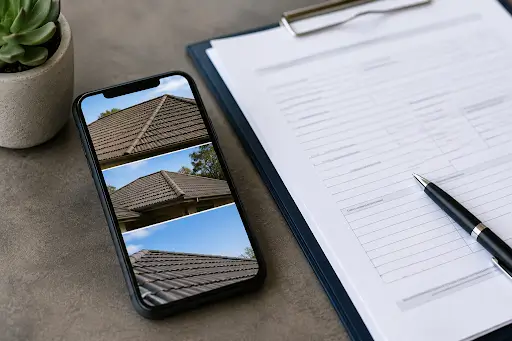
Pro tip: Take clear photos from the ground straight after the storm, before any repairs. Timestamped images make an insurance claim far smoother.
Step 3: Watch for Hidden Damage
Not all storm damage is visible. The trickiest kind is microcracks, tiny fractures in the cells caused by hail impact that you can’t see from the ground.
Microcracked panels often keep working, but at reduced output. If your generation drops noticeably in the days after a storm, that’s a red flag even if the panels look fine. A professional can confirm it with thermal imaging, which reveals hot spots and cracked cells the eye can’t catch. Our guide on why your system isn’t reaching peak power covers output drops.
Step 4: Call a Professional
If your inverter shows a fault, you see visible damage, or your output has dropped, book a proper inspection. A qualified technician will safely assess the roof, test the panels, and give you a written damage report, which your insurer will need.
Our solar repairs and maintenance team handles exactly this across Brisbane and South East Queensland.
Hit by a big storm? Book a professional solar inspection with SolarThoughts and we’ll check your system safely from top to bottom.
How Insurance Works for Storm Damage
Here’s the part that surprises people. Storm and hail damage is generally not covered by your solar panel warranty, because warranties exclude extreme weather. Instead, it’s covered by your home and contents insurance, usually under events like storm or impact.
A few things to know:
| Point | What it means |
|---|---|
| Declare your solar | Tell your insurer you have panels, or a claim may be reduced or denied |
| Storm and hail | Usually covered as an insured event under building cover |
| Flood | Often excluded from standard policies, so check yours |
| The process | Report promptly, provide photos, and get an installer’s damage report |
Contact your insurer before arranging repairs, as many send their own assessor or contractor first. For more detail, independent guides like SolarQuotes on solar insurance are a useful read.
Common Mistakes to Avoid
Climbing on the roof. It’s dangerous after a storm and won’t reveal microcracks anyway.
Assuming no visible damage means no damage. Microcracks cut output while leaving panels looking fine.
Not declaring your solar to your insurer. This is the most common reason claims get reduced or knocked back.
Waiting too long to report. Prompt reporting with photos makes claims far smoother.
Doing repairs before the assessor visits. Many insurers need to inspect the damage first.
Frequently Asked Questions
What should I check on my solar after a storm?
Start with your inverter for error codes or red lights, then inspect the panels from the ground for visible cracks or broken glass.
Can hail damage solar panels?
Yes. Panels resist hail up to about 35mm, but larger stones or wind-blown debris can crack the glass or cells.
Should I climb on the roof to check my panels?
No. It’s dangerous after a storm, cracked panels can leak voltage, and microcracks can’t be seen by eye anyway.
Does my warranty cover storm damage?
Usually not. Warranties exclude extreme weather. Storm and hail damage is generally covered by home and contents insurance.
Do I need to tell my insurer I have solar?
Yes. If you don’t declare your panels, a storm-damage claim may be reduced or denied.
What are microcracks?
Tiny fractures in solar cells from impact. They often aren’t visible but can reduce your system’s output.
How do I know if my panels have hidden damage?
A drop in generation after a storm is a warning sign. A technician can confirm with thermal imaging.
Is flood damage to solar covered?
Often not. Flood is commonly excluded from standard home insurance, so check your specific policy.
What should I do first if I see broken glass?
If you can do so safely from inside, switch off your solar system at the isolator, then photograph the damage and call your insurer.
Are hail guards worth installing?
Usually not. They add cost and can shade your panels, reducing output for little real-world benefit.
Conclusion
After a Queensland storm, a calm, safe check makes all the difference. Look at your inverter first, inspect from the ground only, watch for output drops that signal hidden solar panel storm damage, and call a professional if anything looks off.
And sort your insurance before you need it. Declare your solar, know what’s covered, and document everything with photos. That way, if a big one hits, you’re ready.
Worried your system took a hit? Contact SolarThoughts for a safe, professional storm inspection and we’ll get you sorted.